


I approached Mango Languages as a practical language-learning app rather than a replacement for a full classroom course. Its focus is useful, real-world conversation, and that changes the way I judge it: the important question is not whether it can make me fluent by itself, but whether it helps me build a repeatable speaking habit when I have a few spare minutes. In my experience, it works best when I treat each session as a small rehearsal for situations I may actually face.
Developed by Mango Languages, this Education app is free to install and suitable for Everyone. It has been available since Apr 18, 2012, and the current version is 8.84.0 for devices running Android 8.0 or later. Its 4.8 average from around 24 thousand ratings and more than a million installs suggest that many learners find the approach approachable, although popularity alone does not guarantee that it will match every study style.
How Mango Languages feels when the connection matters
Conversation practice is strongest when the app can respond quickly
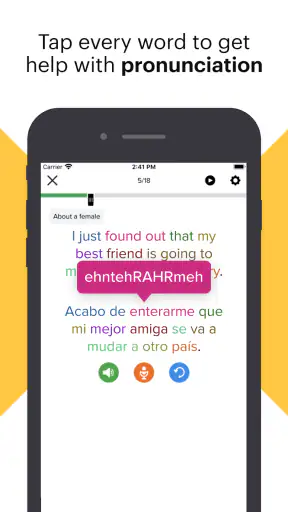
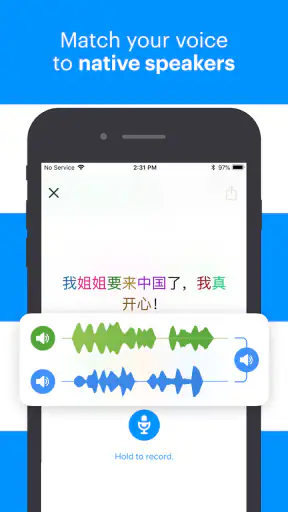
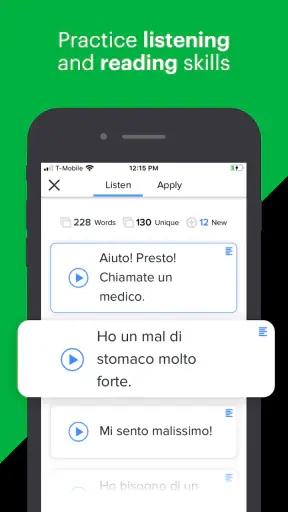
The central appeal is the conversational framing. Instead of making every lesson feel like a vocabulary spreadsheet, Mango Languages presents language through practical exchanges. I found that more motivating than memorizing isolated words because I could connect a phrase with a situation: greeting someone, asking for help, responding politely, or keeping a simple interaction moving.
That design also makes network quality more noticeable. When my connection is stable, the experience feels immediate enough to support short bursts of practice. I can open a lesson, listen, repeat, and move through the material without feeling that the phone is getting in the way. This matters because language practice depends heavily on rhythm. A pause while content loads can break the mental link between hearing a phrase and saying it aloud.
I would not plan an important study session around an uncertain connection. A crowded station, a weak signal inside a large building, or a congested public network can turn a smooth exercise into a stop-and-start routine. The problem is not merely inconvenience. If I am concentrating on pronunciation and sentence order, interruptions make it harder to remember what I just heard and easier to abandon the session.
For that reason, I see connectivity as part of the app’s practical personality. It is most comfortable in a home, office, library, or other place where the phone has a dependable connection. It can still be useful while moving around, but I would begin a lesson before entering a low-signal area rather than assume every part of the experience will remain equally fluid.
A realistic daily routine on a phone
A useful routine for me would be a short session during a lunch break. I would choose one conversational topic, listen carefully once, repeat the key lines aloud, and then revisit the same material later instead of racing through several unrelated sections. That approach turns a spare pocket of time into deliberate practice without pretending that a few minutes can replace sustained study.
The phone format suits this kind of repetition. I do not need a desk, notebook, or long uninterrupted block to start. However, I would use headphones in shared spaces, especially when the lesson depends on hearing small pronunciation differences. Without clear audio, I may recognize a phrase visually while missing the sound pattern that makes it useful in conversation.
There is also a social consideration. Speaking aloud on a bus or in a quiet waiting room may feel awkward, so mobile convenience does not automatically mean every location is ideal. In those moments, I might listen and mentally rehearse, then repeat the phrases properly when I have privacy. That two-stage habit is more realistic than expecting constant out-loud practice everywhere.
Travel is another obvious use case, but I would prepare with care. Before leaving reliable internet, I would open the material I intend to study and make sure I understand how the session behaves on my device. I would not wait until an airport queue or a rural road to discover that a lesson needs a connection at the moment I want it. The app is better as part of a prepared travel routine than as an emergency language tool chosen at the last second.
What happens when the connection becomes unreliable
The most frustrating situation is a lesson interrupted halfway through an exercise. Even a brief failure can leave me wondering whether the app registered the last action, whether I should repeat it, or whether moving forward will skip something. That uncertainty is especially distracting for beginners, who are already using much of their attention to decode unfamiliar sounds.
My practical recovery method is simple: stop trying to force the session through a bad connection. I would leave the exercise, wait until the network is steady, and then return to the last clearly completed point. Repeating a short section is preferable to guessing what was saved or continuing while distracted. It also gives me a useful second exposure rather than turning a technical interruption into wasted time.
If the app closes or the phone changes networks, I would avoid judging progress by memory alone. I would reopen the same lesson and check what remains available before starting something new. This is a small habit, but it prevents fragmented study. Starting several lessons after each interruption can create the illusion of variety while leaving each one only partly understood.
Users who need guaranteed continuity should think carefully about this workflow. A language app that depends on dependable access may be perfectly acceptable for home study but less reassuring for a commute through inconsistent coverage. In that case, a course with clearly documented offline lessons may be a better primary tool, while Mango Languages can remain useful whenever the learner has a reliable connection.
Keeping mobile data under control
I would be cautious about using cellular data for long listening sessions. Audio-heavy learning can become an easy way to use more data than expected, particularly when I repeat phrases or leave a lesson open while doing something else. I prefer to practice over a trusted Wi-Fi connection and reserve mobile access for short, intentional checks.
That does not mean the app is unsuitable for mobile data. It means the learner should decide in advance what “quick practice” means. Opening one conversation, completing a focused exercise, and closing the app is a more controlled habit than browsing through lessons without a stopping point. A timer can help, not because the app requires one, but because time and data use are both easier to manage when the session has a clear boundary.
I would also avoid assuming that a screen left open is the same as active learning. If I am not listening attentively or repeating phrases, the phone may be consuming connectivity without giving me much educational value. Short, concentrated sessions are a better trade-off than passive playback that I barely notice.
People with limited data plans should test their normal routine conservatively. A brief Wi-Fi session lets them see whether the app fits their habits before making it part of every commute. This is particularly important for families sharing one plan, where several small study sessions across multiple devices can become a larger monthly burden.
Where it stands beside familiar alternatives
Compared with flashcard apps, Mango Languages feels more useful for learners who want phrases connected to human interaction. Flashcards are excellent for quick recall and can be easier to dip into when a connection is uncertain, but they may leave me knowing a word without knowing how to place it naturally in a conversation. Mango’s practical framing helps bridge that gap.
Compared with a traditional textbook, the app is more convenient and less intimidating at the start. A book gives me a stable reference that does not depend on a phone session, and it can be better for detailed grammar notes or deliberate review. Mango is stronger when I want to hear and rehearse language in context rather than read explanations for a long period.
Compared with a live tutor, it is obviously less flexible. A tutor can correct my personal mistakes, adapt the difficulty immediately, and explain why a phrase sounds unnatural in a particular situation. Mango Languages is more affordable to begin because it is free to install, but it should be viewed as guided practice, not personal coaching. In-app purchases range from $13.99 to $149.99 per item, so I would examine the available access options carefully before committing to paid learning.
The best comparison depends on the learner’s main obstacle. If I struggle to start, the approachable conversation format may be more inviting than a dense course. If I already speak at an intermediate or advanced level and need detailed correction, specialized materials or a teacher may serve me better. If my main problem is unreliable internet, a dependable offline reference should be part of the plan.
Who will get the most from it
I would recommend Mango Languages to beginners who want a friendly entry into foreign-language conversation, travelers preparing for common interactions, and busy learners who need a phone-based routine. It is also a sensible companion for someone studying elsewhere and wanting extra listening and speaking rehearsal between formal lessons.
The app is especially appealing to people who dislike studying lists without context. Hearing a phrase as part of a practical exchange gives me a reason to remember it, and repeating that exchange can feel closer to preparing for real life than completing a detached quiz.
I would be more cautious about recommending it as the only resource for learners who need academic writing, highly technical vocabulary, detailed grammar analysis, or individualized pronunciation correction. Those goals usually require additional material. I would also hesitate for anyone who expects uninterrupted study in places with poor coverage, unless they have already established a reliable way to access the lessons they need.
Families may appreciate the Everyone age rating, but the best experience still depends on supervision of study habits rather than age alone. A younger learner may enjoy the conversational format, while an adult may need to provide structure: a fixed routine, a small target for each session, and a reminder to speak aloud rather than simply tap through screens.
Small habits that make the experience better
My first tip is to repeat fewer conversations more often. It is tempting to keep moving because a new lesson feels productive, but language becomes useful when phrases can be recalled without staring at the screen. I would choose one exchange, listen for its rhythm, repeat it several times, and return to it on another day.
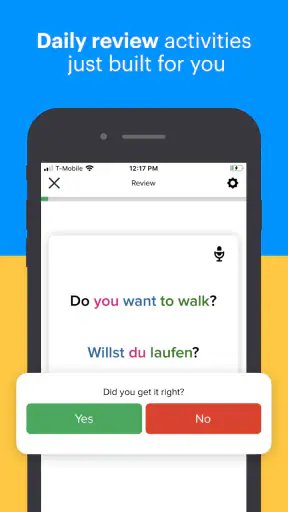
My second tip is to separate listening from performance. On the first pass, I would concentrate on meaning and sound. On the second, I would pause mentally before the response and try to produce it myself. That turns a passive lesson into a small retrieval exercise and reveals which phrases I recognize but cannot yet say.
My third tip is to build a connection-aware schedule. I would do new lessons on stable Wi-Fi, use short reviews when traveling, and avoid beginning anything important just before entering a known dead zone. This is not merely a technical workaround; it protects the continuity that makes conversational practice valuable.
My fourth tip is to keep a separate note of phrases I genuinely expect to use. The app can provide the practice environment, but a small personal list helps connect it to an upcoming trip, a family conversation, or a workplace situation. I would not copy everything. Selecting a few relevant expressions makes review faster and gives the learning a clear purpose.
Finally, I would judge progress by what I can produce, not by how many screens I have completed. If I can understand a familiar exchange and respond with less hesitation, the session has done its job. If I am only recognizing answers after seeing them, I need more repetition before moving on.
My connectivity verdict
Mango Languages is a worthwhile Education app for practical language practice, particularly when I can give it a stable connection and a little focused attention. Its conversational approach makes it more engaging than bare vocabulary drilling, and its mobile format fits short routines at home, during breaks, or before a trip.
The main trade-off is that convenience depends on circumstances outside the lesson itself. Weak coverage, interruptions, and careless cellular use can reduce the quality of practice. I would therefore pair it with a sensible network routine rather than treat it as a guaranteed solution for every journey. When access is dependable, the app feels approachable and useful; when access is unpredictable, a clearly offline alternative becomes more important.
My overall opinion is positive, with one qualification: use it as a conversation-practice habit, not as your entire language-learning plan. The free starting point makes it easy to try, while the optional in-app purchases mean serious learners should consider their long-term budget. For someone who wants practical phrases, regular repetition, and a less intimidating first step, Mango Languages is a strong choice. For advanced learners, data-conscious commuters, or anyone needing personal correction and guaranteed offline access, it is better as one part of a broader toolkit.


